
Your Official Exam Day Checklist
The day before an exam is a good time to remove avoidable uncertainty. Confirm where you need to be, what you must bring and which instructions apply. Prepare a short revision task and a practical plan for the morning so that you can focus on the paper when it begins.
Use this checklist for a Lebanese official exam only when that exam and your participation are confirmed. Dates, eligibility, centres and rules can vary by year, certificate and candidate category. This page does not announce an exam or replace MEHE instructions, your school’s verified notice or the directions on your paper.
A few days before: verify the essentials
Write the following details in one place using the current official notice and your school’s confirmation:
- Certificate, branch, subject and session
- Confirmed date, required arrival time and exam start time
- Centre name, address and the correct entrance if specified
- Required candidate documents and identification
- Permitted and prohibited equipment
- Any approved arrangements that apply to you
Do not rely on a screenshot passed through a group chat without checking its date and source. Save or print the confirmed information where you can access it during travel. If two notices appear to disagree, ask your school or the issuing authority to resolve it before exam morning.
If you have approved access arrangements, confirm the practical details through the appropriate school or examination contact in advance. Do not assume that an arrangement used in class automatically applies at a different centre.
The evening before: pack from the actual rules
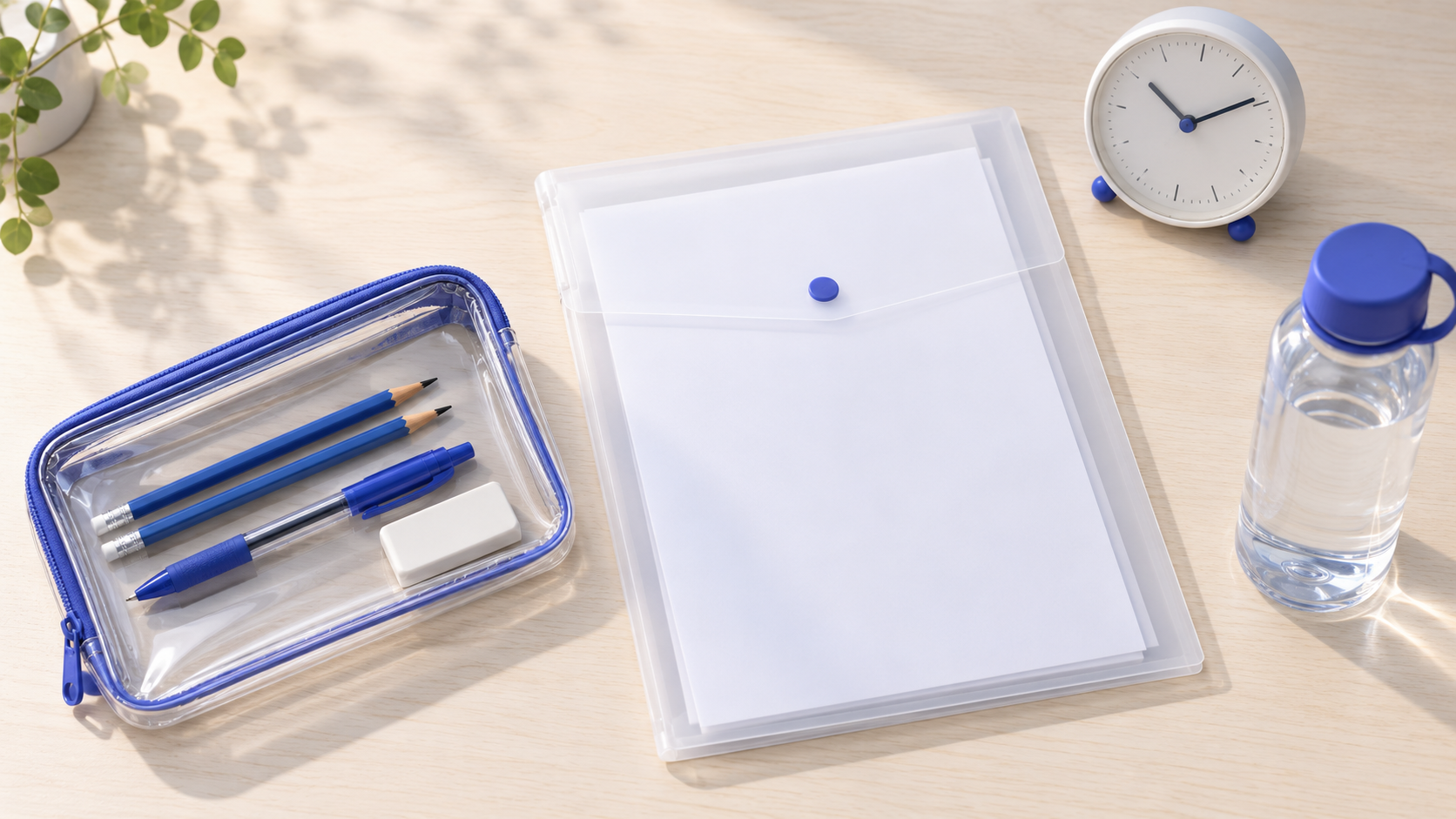
Lay out the documents and equipment your exam instructions require. Test pens and check that necessary mathematical instruments work. If a calculator is permitted, verify the permitted type, its battery and the settings needed for your subject.
Do not assume that a phone calculator, smartwatch, stored notes, formula sheet or particular calculator model is allowed. Past papers can have different rules. Follow the current restrictions on electronic devices, bags, stationery and any food or drinks.
Use this packing check, adapting it to the official list:
- Required documents together and easy to reach
- Permitted pens and a working spare
- Required ruler, pencil, eraser or geometry instruments
- Permitted calculator, if applicable
- Allowed personal items prepared according to the centre’s rules
Keep only the items relevant to that exam. A tidy bag makes a missing document easier to notice before you leave.
Finish revision with a small, familiar task
Review your most frequent errors and a few short examples you already understand. For mathematics, that might mean checking signs, restrictions and units. For a written subject, it might mean recalling an answer outline and the evidence that supports it.
Avoid turning the evening into a new full syllabus plan. If you discover a gap, choose a focused question or ask for clarification rather than opening many unrelated resources. Set a finishing time that leaves room for your normal evening and rest.
The free lessons and revision resources can help with a specific gap. Choose a relevant lesson before starting, so that browsing does not become the whole revision session.
Plan the journey and the morning
Confirm how you will travel and allow a realistic buffer for the route. Arrange a backup where practical. Set an alarm and place your packed materials where you will see them. Check the latest verified notice before leaving if your school or examination authority has asked candidates to watch for updates.
On arrival, follow staff directions and check the room or seating information. Raise a missing-paper, identification or equipment problem with the responsible staff promptly. Do not improvise around a rule because another candidate says it is acceptable.
When the paper begins: read before committing
Check that you have the correct paper and that its pages are present. Read instructions about question choices, working, answer locations and permitted materials. If something is unclear or a page seems missing, notify the invigilator.
Plan time using the paper’s structure and marks where helpful, leaving time for a final check. For an illustrative 90-minute, 60-mark practice paper, reserving 10 minutes for checking leaves about 1.33 minutes per mark. That is a planning estimate, not an official rule or a demand that every question take equal effort.
If you become stuck, note useful working, leave space and return when appropriate under the paper’s instructions. Keep question numbers clear so the examiner can follow your answers.
Before handing in
Check required identification fields, question numbering and any answer-choice instructions. Look for missed subparts, copied numbers, units and conclusions. Make corrections clearly using the permitted method. Hand in all required material and follow the invigilator’s directions.
After the exam, prepare for the next confirmed subject rather than spending the whole day reconstructing disputed answers. Use the official-paper archive for future practice, with its coverage notes in mind. Your next useful step is a calm, specific task you can complete.